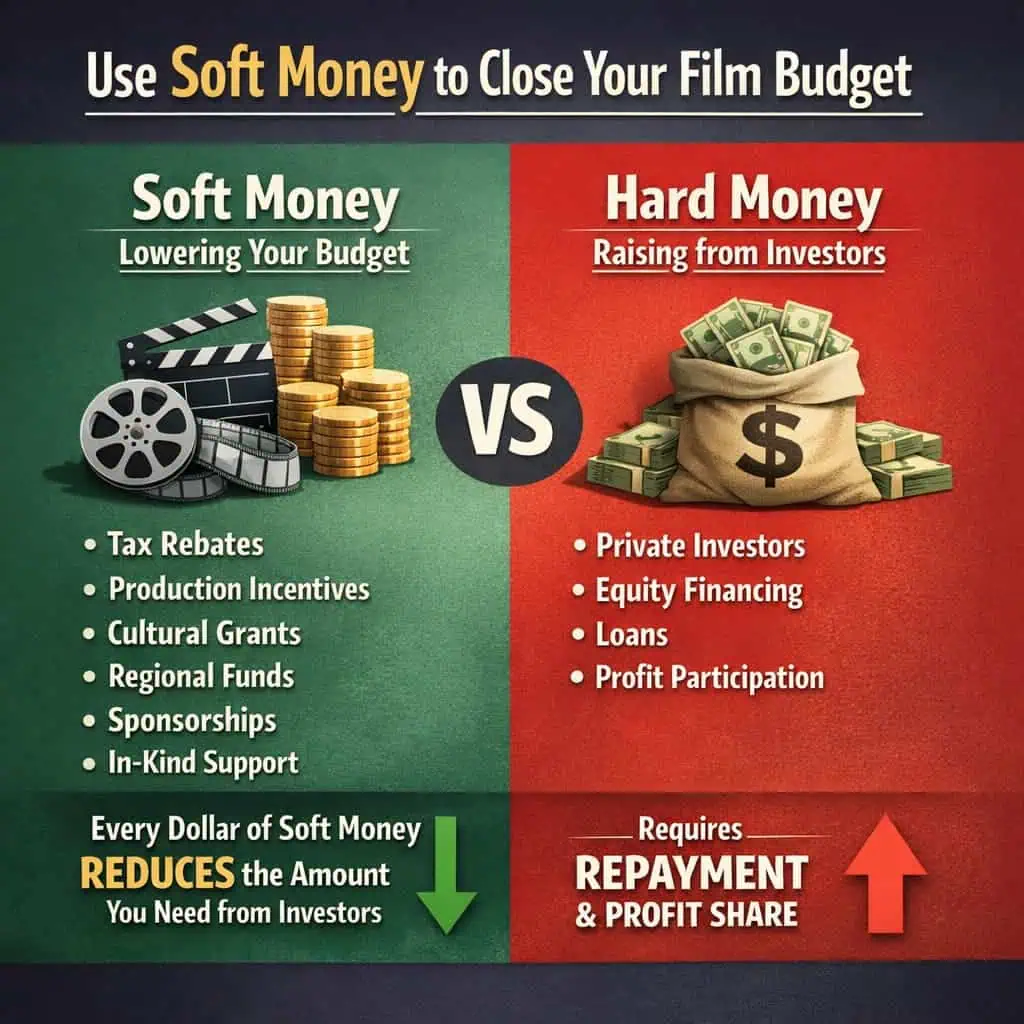
Independent film financing becomes much easier when you stop thinking of private investors as the only starting point. Instead of trying to raise the entire budget through equity, filmmakers can use “soft money” to reduce the amount that actually needs to be financed. Tax rebates, grants, regional incentives, sponsorships, nonprofit support, and in-kind contributions can all turn a difficult budget into a more realistic plan.
Turn Local Support Into Real Budget Leverage
Soft money is powerful because it can come from sources that do not usually require ownership, repayment, or profit participation. For an indie filmmaker, that means every dollar secured through rebates, grants, local funds, donated locations, or production support lowers the amount you need to ask from investors. It is not just extra money; it is budget leverage.
Local support can be especially useful because many regions want film productions to spend money in their communities. State tax incentives, city arts grants, regional film funds, and local business sponsorships may all be available if your project fits the requirements. Even in-kind support, such as free locations, discounted equipment, hotel partnerships, or donated meals, can reduce your cash budget in a meaningful way.
The key is to research these opportunities before you build your final finance plan. Look at where you plan to shoot, what expenses qualify for rebates, whether your story connects to a specific community, and whether your team meets grant or cultural funding criteria. When you approach investors with that work already done, your project looks more organized, realistic, and financially aware.
Make Investors Comfortable With a Smaller Ask
Investors are more likely to take a film seriously when the full burden is not placed on them. If you can show that 20%, 30%, or even 40% of the budget may be covered through soft money, the remaining amount feels less risky. Instead of asking someone to fund the entire film, you are inviting them to close a more manageable gap.
This also changes the tone of the pitch. Saying, “We need $500,000,” can sound overwhelming, especially for an indie project without major attachments. But saying, “We have identified rebates, grants, sponsorships, and in-kind support that can offset $150,000, and we are raising the remaining $350,000,” makes the plan feel more grounded. It shows that you are not simply hoping for investment — you are actively structuring the budget.
Soft money can also help protect your ownership and creative position. The less equity you need to give away, the more control you may keep over the film’s upside and decision-making. For indie filmmakers, stacking rebates, grants, sponsorships, and local support before seeking investors is not just a funding tactic; it is a smarter way to make the entire project more investable.
Before you pitch private investors, look for the money that does not dilute your project first. Soft money can reduce risk, strengthen your finance plan, and make your budget easier to close. For independent filmmakers, the smartest raise is often the one made smaller before the pitch ever begins.