When trying to fund your film and put yourself out there, it is quite common for filmmakers to run into potential film financing frauds and scams. Film funding scams are a significant issue in the industry and can take various forms. Sadly, it is all too common in many areas of life, for people who desperately want or need money to throw judgment, logic, common sense, and even morals, out the window to attain their financial goals. We have heard from dozens of filmmakers over the years about the financial frauds they’ve suffered, usually with little to no consequences, and here we want to highlight some of the most common pitfalls for you and how to steer clear of them.
Some of these tricks are quite obvious and some a bit more hidden. Here are some common types of film financing scams to watch out for, feedback and examples from our filmmakers, and how many, if not all of these, can be avoided.
Add to Film Financing Lessons Page & https://filmproposals.com/how-do-you-vet-film-investors-on-filmproposals.html
Jeff, a filmmaker, emailed us early on when we posted some contacts from investors. “When I’ve followed up on some of the featured investor leads, they have turned out to be a bit sketchy — either of the bait-and-switch variety, or even up-front-fee-scammers.” (see: How do you Vet Film Investors on Filmproposals?)
We have since stopped posting these leads on our website for several reasons. Every one of these investors was vetted before they were posted on our site, however, some companies & people change over time. Especially when they perceive how easily filmmakers can be preyed upon. Filmmakers were making themselves easy marks for scammers – we would say, “email privately about xyz” and they would post public comments like, “I have great ideas. call me at (#) or email me (name@). For the film investors we kept on our site, yes, sometimes they charge a consultation fee (just like we do) for their time and expertise. No one, in any industry, can offer continuous free consults, and in particular, for those who can’t/won’t do any work for themselves. In the example of FilmProposals, we cannot, and will not, set aside time for anyone who can’t bother to read what we put out there for free. That is a handout. We receive thousands of “Dear Sir: I have an idea about a film, call me (123) 456-7810.”
No one worth anything to you is following up on that. If you email a stranger blindly and they are willing to give their time to you for free, so you can learn what already exists at no cost in every site, book, pdf, etc and then charge you to “invest” their money to do what they just discussed. RUN! RUN FAST! You know how these people make their money? Scamming people who won’t work for themselves and expect a handout. The # rule in all of these frauds and scams is don’t advertise you are an easy target.
“My name is Jonathan and I am a screenwriter, editor, filmmaker and teacher. I was making an angel movie entitled “XYZ” for international distribution, but unfortunately run into an Asian scam…(see: 10 Things You MUST Do To Attract Film Investors)”
So many of the filmmaker messages we get say things like “Asian scam,” ” a Dutch company, etc.” (We have nothing against any people of any country! These are just random examples!) There are millions of foreign ethical and moral companies, financiers and investors around the globe. However, in any country, there are those who are none of those things. If you continually advertise how uneducated you are about money, financing and your industry you are to strangers, like in the above example, you have made yourself an easy mark. One thing that sometimes holds scammers back are the laws and repercussions in their own country. In the US, for example, SEC and tax laws may keep people in check because the risk of attention from those agencies outweighs the rewards. However, what are the chances someone from another country is going to be able to engage those agencies in pursuing someone for a foreigners’ money back? Pretty much none at all. Different laws, processes, languages, legal, financial and tax systems…are you ready to take that on for whatever money you are asking/risking? No local agency or law enforcement is using their resources for a foreigner to recoup a few thousand, hundred thousand or even a million dollars. If you are not 100% certain about who you are doing business with, don’t do it.
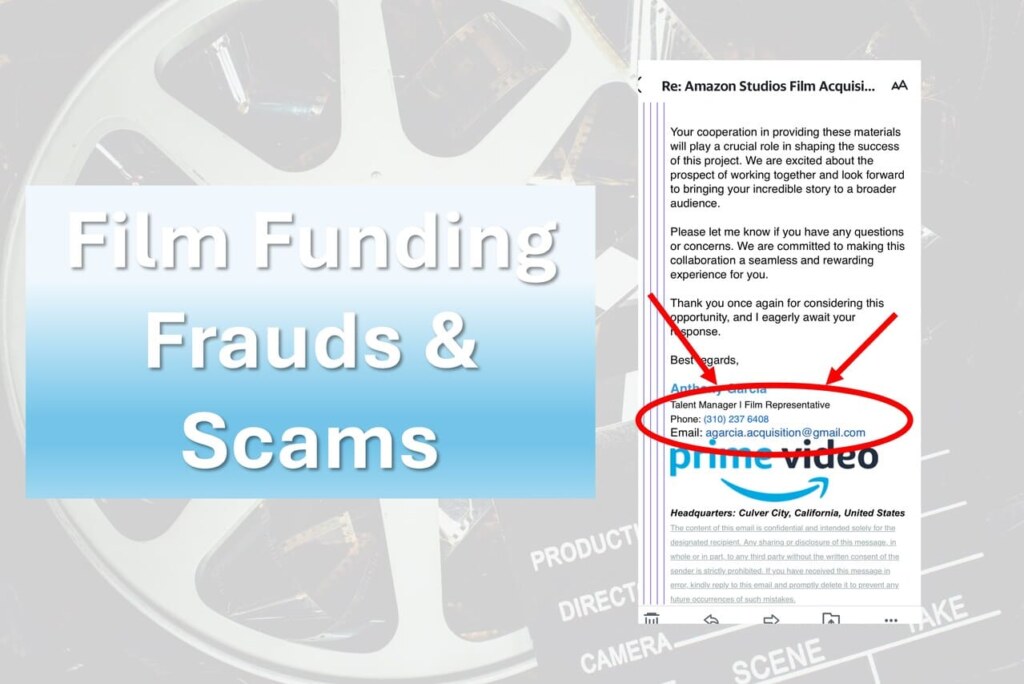
Here is an email sent to us from John telling us he was being scammed. Luckily, he did not fall for it right away, but you can you see the GLARING error here?
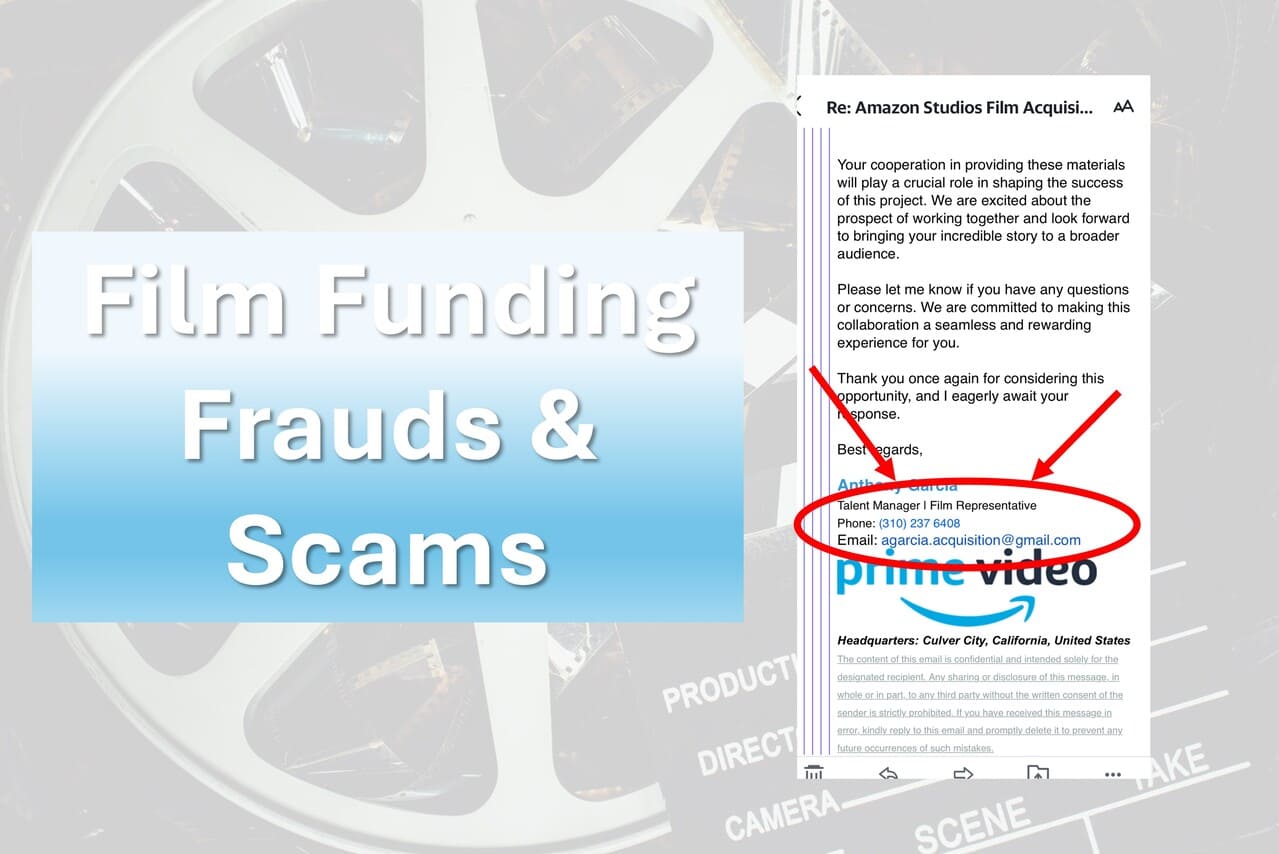
No one who works at any professional or large company does official business under a “gmail” account. And if we’re talking large companies, oh, let’s say, like Amazon, you can be absolutely sure they are using their professional and/or corporate contact info to do business. So, to avoid these scams, check the email of the sender, look up their company domain name (ie, @filmproposals.com), look at the website. You can further vet any contacts by asking and searching on filmmaker message boards and groups. If you can’t figure who these people are, you should not give or receive any funds from them.
You want to make your film. You’ll do just about anything to make your dreams come true. But here’s the thing. DON’T! The film business is risky for all parties involved – any remotely intelligent person knows that. But that doesn’t mean you need to make yourself prey by advertising how little you know and how desperate you are. If you have a strong OFFER, you are much less likely to be taken advantage of. If you face the challenge of financing from a strong, knowledgeable, educated position and with an investment offer that reflects what you know, you’ve pretty much eliminated the vultures up front. Your offer, backed up with your line item budget, script registered and protected, revenue projections and all that goes into a solid investment, will scare them away.
Not once, in 22+ years have we heard of anyone (trust me, we get feedback from our filmmakers all the time!), who followed our process, educated themselves by other filmmaker successes, ran their investment numbers, formed their LLC/Company, put together their business plan and pitch deck and then got scammed. Are all our filmmakers all 100% funded? No, of course not, but they definitely haven’t been scammed.
Being cautious and doing thorough due diligence can help you avoid falling prey to these types of scams and secure legitimate funding for your film project.
Back to Top of