Until recently, documentary funding was usually done with the intent of causing social change or educational outcomes, and with little or no regard for profit or ROI. However, with the unprecedented growth of streaming channels and audiences’ voracious appetite for niche content, documentaries are now entering the for-profit movie production world and succeeding, while simultaneously achieving the same social and educational goals. This is FANTASTIC news for documentarians, as you now have an even greater pool of resources for your documentary funding and they can be combined in multiple ways to help you achieve your goals. When looking for documentary investors, you want to make sure to perfect your offer with a Documentary Business Plan and when seeking donations or applying for grants, check out these 10 Tips for Grants and Fundraising.
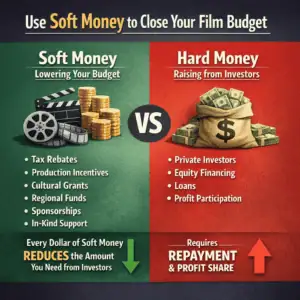
As long as you’re clear on which money is being raised with the promise of an ROI, and which money is being raised as non profit (ie, the donor is donating money to a non profit corporation), you can raise your budget from all types of funding. It is important to note that Non Profit does not mean NO profit. The key to the proper use of the non-profit in entertainment finance is to understand that donations can be used to finance any project but that profits cannot flow to the donors. Profits CAN flow, however, to private investors based on the amounts and order they’ve invested and more importantly, how the company is structured that accepts these investments. This blows open the endless possibilities filmmakers have to raise their documentary financing. Documentary.org defines the various fundraising types for documentaries:
A for-profit business is created to achieve a monetary profit to be shared among owners, shareholders, investors or others, depending upon its structure.
A non-profit business is created to achieve a charitable, educational, scientific, religious or literary mission to benefit the public good.
NEW! Documentary Business Plan & Documentary Pitch Deck
FilmProposals is thrilled to offer help to documentary producers looking for investors, by enhancing our Film Fundraising toolkits to address the specific needs of documentarians. The highlight is a unique Documentary Business Plan Template included in all of our Film Financing Toolkits and Bundles. Much of the Documentary Business Plan is just like that of our narrative Film Business Plan Template, however, we’ve also done some major custom work to specifically highlight why documentaries are a great investment and how to best showcase your documentary to investors:
Documentary Business Plan Template – this new template is completely redone to focus only on documentary films. Recent successes, emerging documentary trends, streaming and studio deals, distribution patterns, audience statistics, revenue generated for sample films and much more. When did Docs become profitable and start selling for $5M or $10M at festivals? We lay it all out for you…
Documentary Pitch Deck – while our pitch deck template can be used for any type of film, you will use your business plan research to ensure the deck showcases your documentary as a worthy investment opportunity
Financial Projections/ Comparable Films – our custom database and custom financial projections flow seamlessly for both documentaries and narrative films
The new Documentary Business Plan Template is included in ALL of our Film Financing Toolkits and Bundles, so you can purchase any of them and be well on your way to funding any part of your documentary with private investments.
More Documentary Fundraising
Here are some of our favorite articles about Documentary Fundraising using privte equity and investors.
Funding Your Documentary Film with Equity Investments – A long-time staple in the narrative filmmaking community, equity investments allow documentary filmmakers to raise funds without lengthy grant applications.
A Guide on How to Treat Your Equity Investment Funders – “Every documentary I have been involved with usually had a combination of grants or soft money, as well as equity investment, which helped it get to the finish line. Often both are required these days.”
10 Tips for Grants and Fundraising
When looking for documentary funding through grants, donations, and any other fundraising path that does not offer a potential ROI, you’ll want to check out Desktop Documentaries, the #1 documentary website, offering several free courses and helping thousands of filmmakers all over the world navigate the fundraising and grant proposal landscapes.
No doubt, documentary funding is tough work. But here’s the good news…You CAN raise documentary capital and it may not be as hard as you think.
NETFLIX: Selling Your Documentary To Netflix
Netflix is in constant need of fresh content and their buyers are seeking outstanding independent filmmakers and documentary creatives who can deliver the stories that Netflix wants. Learn the ins and outs of getting your doc or doc series onto Netflix with SELLING YOUR DOCUMENTARY TO NETFLIX.
7-Day Documentary Crash Course
If you enjoyed this article, be sure to check out the variety of Documentary Fundraising Toolkits and Courses from the Emmy-winning creator of Desktop Documentaries. Fundraising Tooklits, FREE Starter Courses, Proposal templates, Budget templates, specific fundraising ideas and more.
All the best fundraising tools, templates and resources, including 20+ years of experience, combined into one comprehensive packet.
10 Tips for Documentary Funding
Many first time filmmakers have the fantasy their documentary money will come in one big check, from one big donor or foundation. The reality is, funding often comes from many different sources.
– Faith Fuller, an Emmy-winning documentary filmmaker and primary author of Desktop Documentaries,
1) Make a Trailer
There is no way to over-emphasize the importance of having a powerful trailer that excites, inspires and captures your documentary’s potential. Equally important, a bad trailer can doom your fundraising efforts, so make sure it’s excellent.
2) Ask For a Specific Amount For a Specific Purpose
Even if you need $250,000 to make your documentary, avoid sharing that big number. It is too vague and intimidating. Raise money in manageable chunks for each step of the filmmaking process. Example: “I urgently need $10,000 to cover travel expenses and filming for XYZ event in Botswana.”
3) Create Urgency
This is especially important when raising money online. A specific goal within a specific time frame gets people into action. This is why KickStarter.com is such a fantastic online fundraising tool.
4) Build a Documentary Fundraising Team
The more people you ask for help, the higher your chances for success. Enlist help from people who share a passion for your project and are willing to personally approach people they know and other potential donors. Have weekly meetings to keep your team motivated and on track.
5) Low Hanging Fruit
As tempting as it may seem to go after the Gates Foundation for your documentary funding, you will have much better success approaching individuals who already know and trust you or who are already “pre-sold” on the subject matter of your documentary. You’ll find a huge list of documentary funding at http://foundationcenter.org
6) Make a Direct Ask
There is no substitute for picking up the phone or meeting someone in person, passionately stating your case and asking for a specific amount of documentary funding. It is one of the hardest things you’ll ever do, but it’s one of the most powerful and effective ways to get funding. People need to be able to look you in the eyes or hear in your own voice why this project is important to you.
7) Build a Strong Web Presence
Build a strong web presence for your film including a Facebook page, website and blog. Make sure there’s a clear way for people to donate and sign up for updates.
8) Build a Mailing List
People interested in your project are the core folks you can approach throughout your project for ideas, support and to help get the word out about your project. You can’t start building your list too soon.
9) Offer Special Incentives
Incent people to provide you documentary funding with different donation levels and exclusive gifts, like signed posters, a pre-release DVD, a “members-only” Director’s forum, private invite to a first screening, a credit in the film, free t-shirt, etc. People love to feel they’re part of something unique and exclusive.
10) Offer Sponsorship Packages to Businesses
For example, for a $10,000 donation they’ll get their logo shown at the beginning and end of your documentary and promoted on your website and in all your marketing efforts.
Many first time filmmakers have the fantasy their documentary funding will come in one big check, from one big donor or foundation. The reality is that documentary funding often comes from many different sources and so your fundraising strategy must involve casting a wide net and following any and every lead you can think of. Documentary grants are often the hardest and most time consuming option and are only recommended if you have a solid filmmaking team with a strong list of credits.
In summary, remember people give money to people they like and trust. So, no matter your documentary funding strategy, you can not go wrong interacting and building relationships with as many people as possible and sharing your passion for your project with anyone who will listen.
Built on 24 years of film financing experience and the materials that have helped filmmakers raise real money. Have us build it with you, or do it yourself.
Done With You
Film Business Plan Sprint
Your investor-ready business plan, reviewed by an expert
$500
AI Prompt Guide that interviews you about your film